
Getting started with welder work over here
Look I've been around the welding scene in the UK for years now and it's not like what you see in movies. Pay can be solid if you know where to look but there's always that catch with travel or shifts.
Thing is most guys I know started by just getting their tickets sorted first. MIG or TIG? Doesn't matter much at first but it changes what sites you can walk onto later.
How the pay actually shakes out
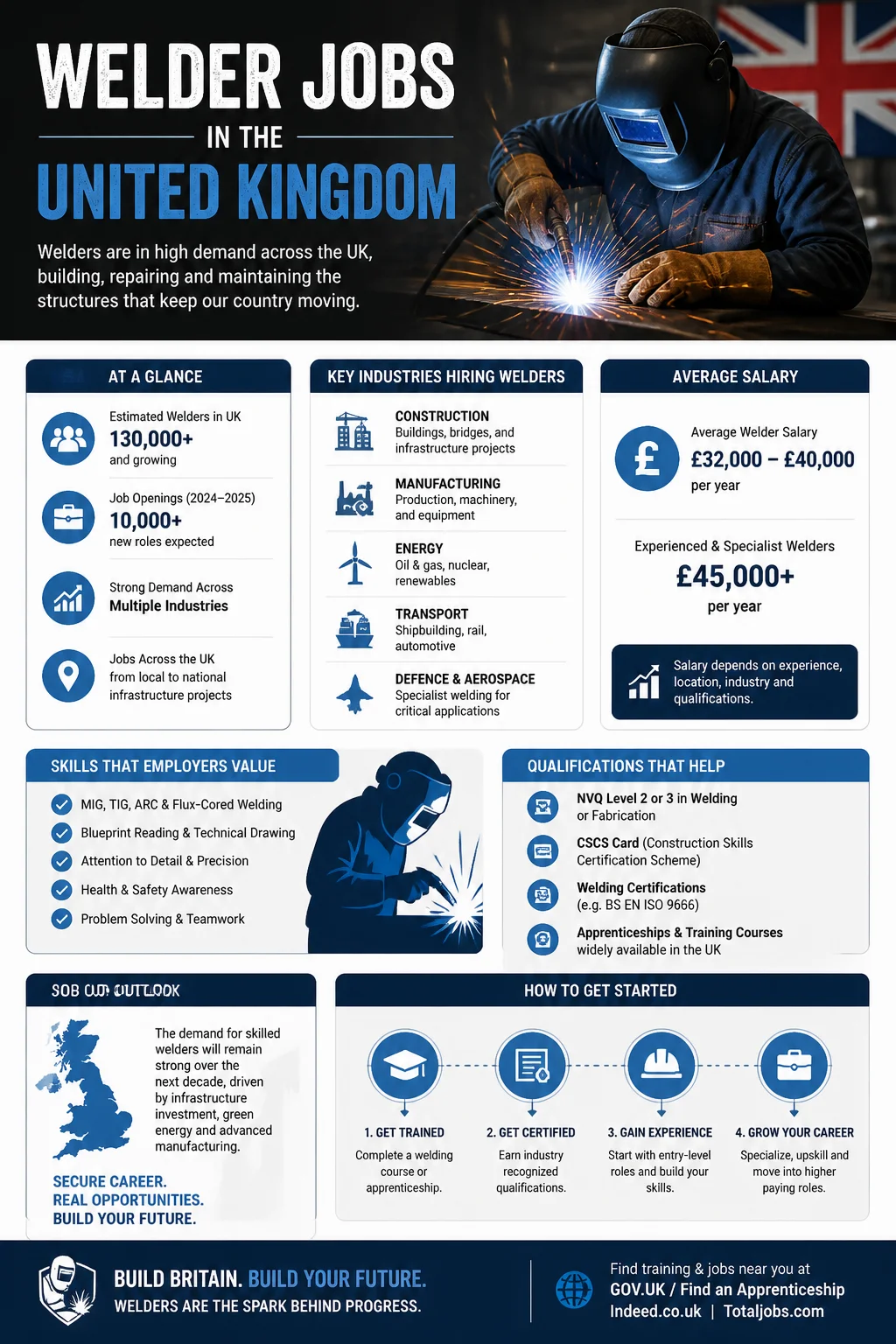
From what I've seen entry level runs around twenty five to thirty quid an hour depending on location. London or big projects push it higher but the cost of living eats that fast. Experienced welders though? They clear forty plus easy on the right contracts.
And overtime is where it gets interesting. Some weeks you're home every night. Others you're gone for weeks on a rig or factory shutdown. Not great if you've got kids but the money adds up quick.
- Offshore gigs still pay the best but they're harder to get into without experience
- Fabrication shops in the Midlands offer steadier hours
- Pipeline work comes and goes with big infrastructure jobs
Where people actually land these roles
Honestly speaking agencies handle a ton of placements. Reed and Indeed pop up first but specialist ones like CVW or Trade Skills know the sites better. Word of mouth still beats everything though. Ask around on a job and someone always knows who's hiring next month.
Big difference when you show up with your own kit. Employers notice that stuff. Means less downtime for them and you look serious about the work.
Training and tickets that matter
You can't skip the basics. City and Guilds or NVQ level two gets your foot in. Then CSWIP or ASME quals open doors on bigger contracts. I went the apprenticeship route years back and it was slow but steady.
Thing is some places want you to refresh every couple years. Costs add up but you can't argue with it if the job requires it.
Real talk though – safety courses like confined space or working at height get you on more sites. Skip them and you're stuck with basic shop work.
Daily life on the tools
Shifts vary wildly. Factories might be days only. Construction can mean early starts and late finishes. I've done both and the variety keeps it from getting boring but it wears on you after a while.
Weather plays a part too. Outdoor work in winter isn't fun. Indoor fab shops feel easier but they get hot in summer. Pick your poison I guess.
Here's the thing – the work itself is satisfying when you see a clean weld and know it'll hold. But standing all day or crawling into tight spots takes its toll on the body. Most welders I know switch to inspecting or teaching later on.
What to watch for when applying
Check the contract length. Some are three months then nothing. Others roll on for years. Read the fine print on travel too. They might say 'nationwide' but mean Scotland one week then Wales the next.
References count. A good word from a previous foreman gets you interviews faster than a perfect CV.