
Welder Jobs in India: A Comprehensive Guide to Opportunities and Growth
Welding is a critical skill in numerous industries, from construction and manufacturing to automotive and infrastructure development. In India, the demand for skilled welders is on the rise due to rapid industrialization and urbanization. This article explores the landscape of welder jobs in India, including job opportunities, required skills, salary expectations, and tips to kickstart a successful career in welding.
What Are Welder Jobs?
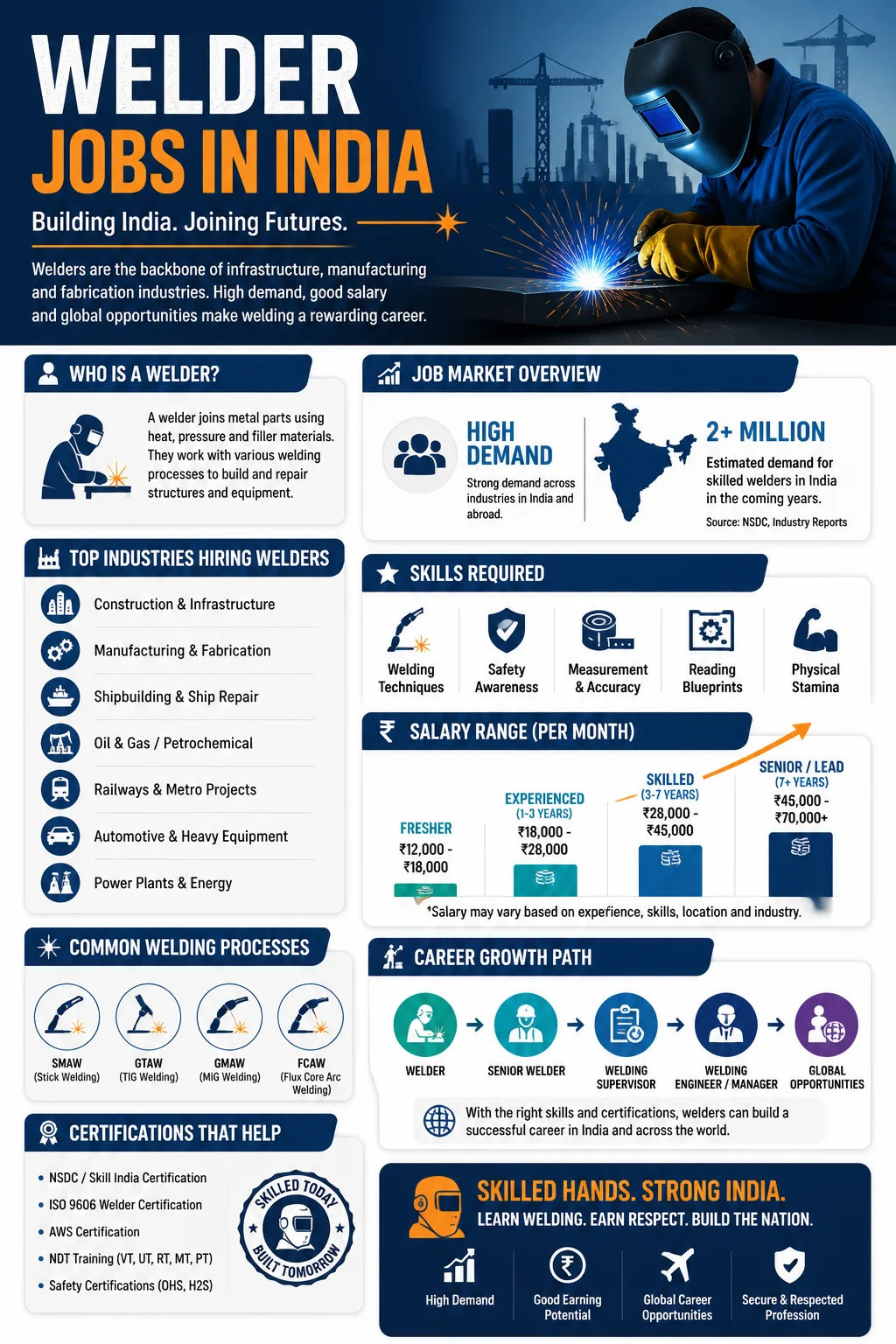
Welder jobs involve joining metal parts together using heat and specialized equipment. Welders work with materials like steel, aluminum, and other alloys, creating structures for buildings, bridges, vehicles, and machinery. Their work is essential in industries such as construction, shipbuilding, oil and gas, and manufacturing. In India, welders are employed in both public and private sectors, contributing to the nation’s infrastructural growth.
Types of Welder Jobs in India
There are various types of welding jobs available in India, catering to different skill levels and industries. Here are some common roles:
- Arc Welder: Uses electric arcs to melt and join metals, commonly used in construction and repair work.
- MIG/TIG Welder: Specializes in Metal Inert Gas (MIG) or Tungsten Inert Gas (TIG) welding, often used for precision work in automotive and aerospace industries.
- Underwater Welder: A niche role involving welding in underwater environments, typically for oil rigs or ship repairs.
- Pipe Welder: Focuses on welding pipes for industries like oil, gas, and water supply.
- Structural Welder: Works on large-scale projects like bridges, buildings, and industrial plants.
Skills and Qualifications for Welder Jobs
To secure a welder job in India, candidates need a mix of technical skills and formal training. While a high school diploma or equivalent is often the minimum requirement, many employers prefer candidates with vocational training or certification from institutes like Industrial Training Institutes (ITIs). Key skills include:
- Proficiency in different welding techniques (MIG, TIG, Arc).
- Knowledge of safety protocols and equipment handling.
- Ability to read blueprints and technical drawings.
- Physical stamina and hand-eye coordination.
- Basic understanding of metallurgy and materials.
Certifications from recognized bodies, such as the American Welding Society (AWS) or Indian Welding Society, can significantly boost employability.
Job Opportunities for Welders in India
India’s growing economy offers numerous opportunities for welders across various sectors. Major cities like Mumbai, Chennai, Bangalore, and Hyderabad are hubs for manufacturing and construction, providing a steady demand for skilled welders. Additionally, government initiatives like “Make in India” and infrastructure projects such as the Bullet Train and Smart Cities Mission have created a surge in welder job openings.
Welders can find employment in:
- Construction companies building roads, bridges, and skyscrapers.
- Automotive and railway manufacturing units.
- Shipbuilding and repair yards in coastal regions like Visakhapatnam and Kochi.
- Oil and gas refineries in states like Gujarat and Assam.
- Small-scale fabrication workshops and repair shops.
Salary Expectations for Welders in India
The salary of a welder in India varies based on experience, location, and specialization. Entry-level welders can expect to earn between INR 15,000 to INR 25,000 per month. With a few years of experience and advanced certifications, salaries can range from INR 30,000 to INR 50,000 per month. Specialized roles like underwater welding or jobs in the oil and gas sector can offer even higher pay, sometimes exceeding INR 1 lakh per month.
How to Start a Career in Welding in India
If you’re interested in pursuing a career in welding, follow these steps to get started:
- Education: Complete at least a high school education with a focus on science and mathematics.
- Training: Enroll in a welding course at an ITI or a private training center to learn the basics.
- Certification: Obtain certifications to validate your skills and improve job prospects.
- Apprenticeship: Gain hands-on experience by working as an apprentice under experienced welders.
- Job Search: Look for openings on job portals like Naukri.com, Indeed, or through local contractor networks.
Challenges and Future Prospects
While welder jobs offer promising opportunities, the profession comes with challenges such as exposure to hazardous conditions, long working hours, and the need for continuous skill upgrades. However, with advancements in automation and robotics, welders who adapt to new technologies can stay ahead in the industry.
The future of welder jobs in India looks bright, with the government’s focus on infrastructure and manufacturing. Skilled welders will continue to play a vital role in shaping the country’s industrial landscape.
Conclusion
Welder jobs in India present a rewarding career path for those with the right skills and determination. Whether you’re a fresher or an experienced professional, the welding industry offers diverse roles, competitive salaries, and opportunities for growth. By acquiring the necessary training and certifications, you can build a successful career in this high-demand field.