

Plumber jobs in New Zealand start with the right training path
Most folks get into this by signing up for an apprenticeship straight out of school or after a bit of odd work. You do on the job learning for three or four years while picking up the theory at a polytech. It's not cheap to get the books and gear but the pay during training helps a lot.
Once you're qualified you can branch out pretty quick. Some stick with residential work fixing leaks in houses around Auckland suburbs. Others head into commercial jobs on big builds in the city centres. The choice really depends on if you like dealing with people at home or prefer the bigger sites with crews.
Pay rates you can actually expect right now
From what I've seen an apprentice might pull in around twenty five dollars an hour to start. Qualified plumbers in the main centres often land between thirty five and forty five an hour. Throw in overtime on weekends and that jumps fast. Christchurch has been steady lately because of all the rebuild work still happening.
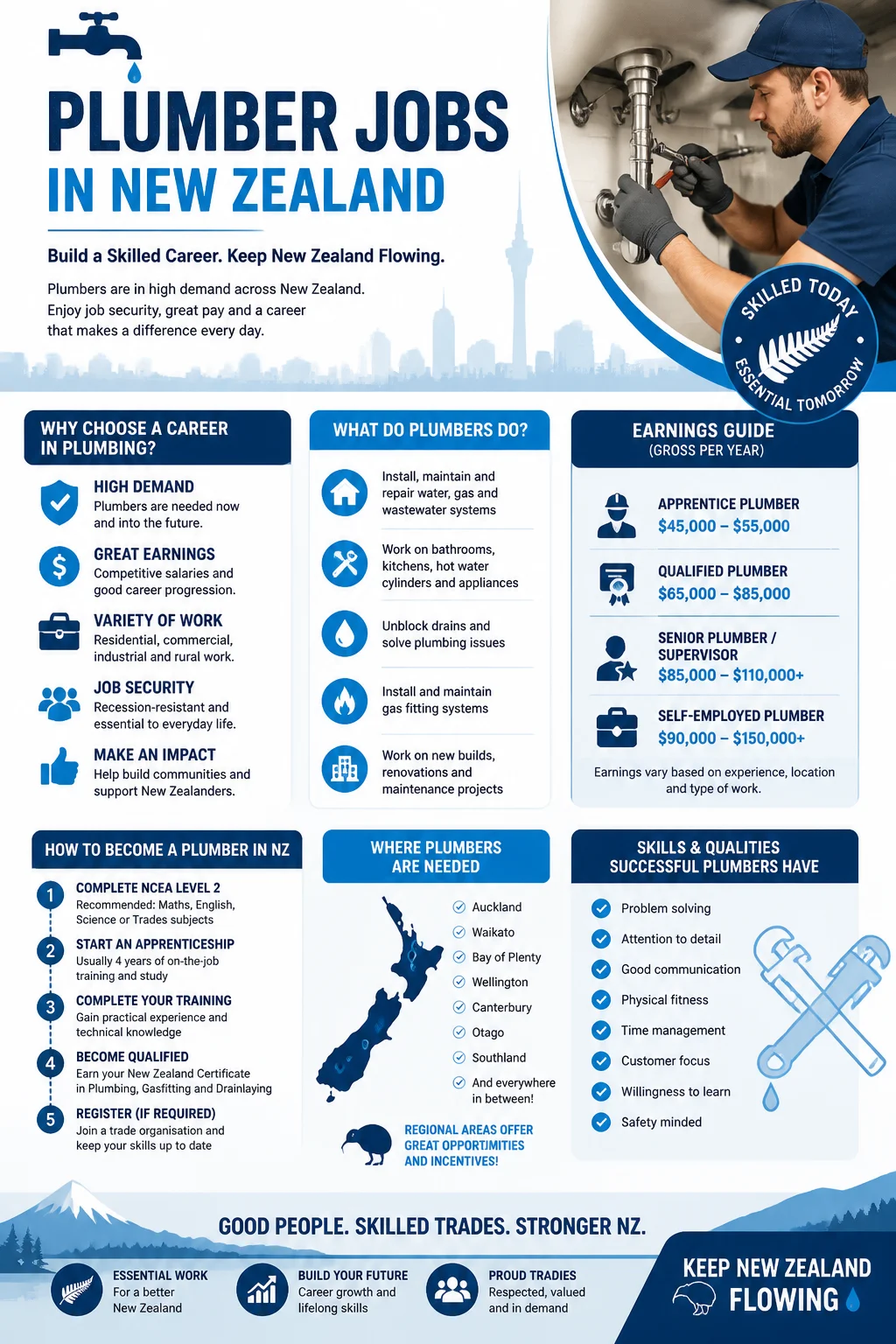
But it varies by region. Smaller towns pay a touch less yet the cost of living drops too so it balances out for some. Not gonna lie the top earners are those who go out on their own and run a van with a couple of helpers.
Where the jobs actually pop up
Seek and Trade Me Jobs are the obvious spots but don't sleep on local Facebook groups. Plenty of smaller companies post there first before they bother with the big boards. Word of mouth still rules in the trades so chatting to other sparkies or builders at the pub can land you something solid.
Rural areas sometimes struggle to find good people so if you're happy to drive a bit or shift towns you might score a role with a company truck and fuel card thrown in. That's a game changer for some.
Immigration rules have opened up a bit lately for skilled trades so if you're coming from overseas check the skills shortage list first. Plumbing sits on there in quite a few regions.
Daily life on the tools
A typical day starts early with a look at the job list on your phone. You might be under a house in the morning sorting a drainage issue then up on a roof after lunch sorting gutters. It's physical but you get variety which beats sitting at a desk.
Weather plays a part here. Rainy days in Wellington can slow outdoor work but indoor fixes keep rolling. And the earthquakes in some spots mean extra training on seismic bracing for pipes which not every country worries about.
Tools cost money to start but good ones last years. I've seen guys buy second hand sets off mates who upgraded and save a bundle that way.
- Gas fitting tickets open extra doors
- Drainlaying adds more options too
- Health and safety tickets are basically mandatory now
Some weeks you finish by three if jobs run smooth. Other weeks you're on call for emergencies and that can mess with family plans but the extra cash helps.
Sticking it out long term
Burnout hits if you take every job that comes. Setting boundaries with customers matters. Charge properly for after hours stuff instead of feeling bad about it. Plenty of plumbers I know have side gigs doing maintenance contracts for schools or apartment blocks which gives steadier income.
The trade is always changing with new materials and water saving rules coming in. Keeping up with short courses keeps you ahead when bidding on jobs.
Honestly if you like solving problems and don't mind getting your hands dirty this line of work treats you okay in New Zealand right now.