

Electrician jobs popping up all over the Philippines right now
Construction keeps growing in places like Manila, Cebu, and even some provinces. That means more calls for guys who can handle wiring, panels, and troubleshooting without burning the place down.
From what I've seen, factories and new residential projects are the big drivers. Not gonna lie, residential work can be steadier but industrial gigs often pay better once you get some experience under your belt.
Pay ranges that actually make sense
Entry level electricians usually start between 15,000 to 22,000 pesos monthly. After a couple years and maybe a few certifications, you can push past 30k pretty easily. Overtime and site allowances add up fast on bigger builds.
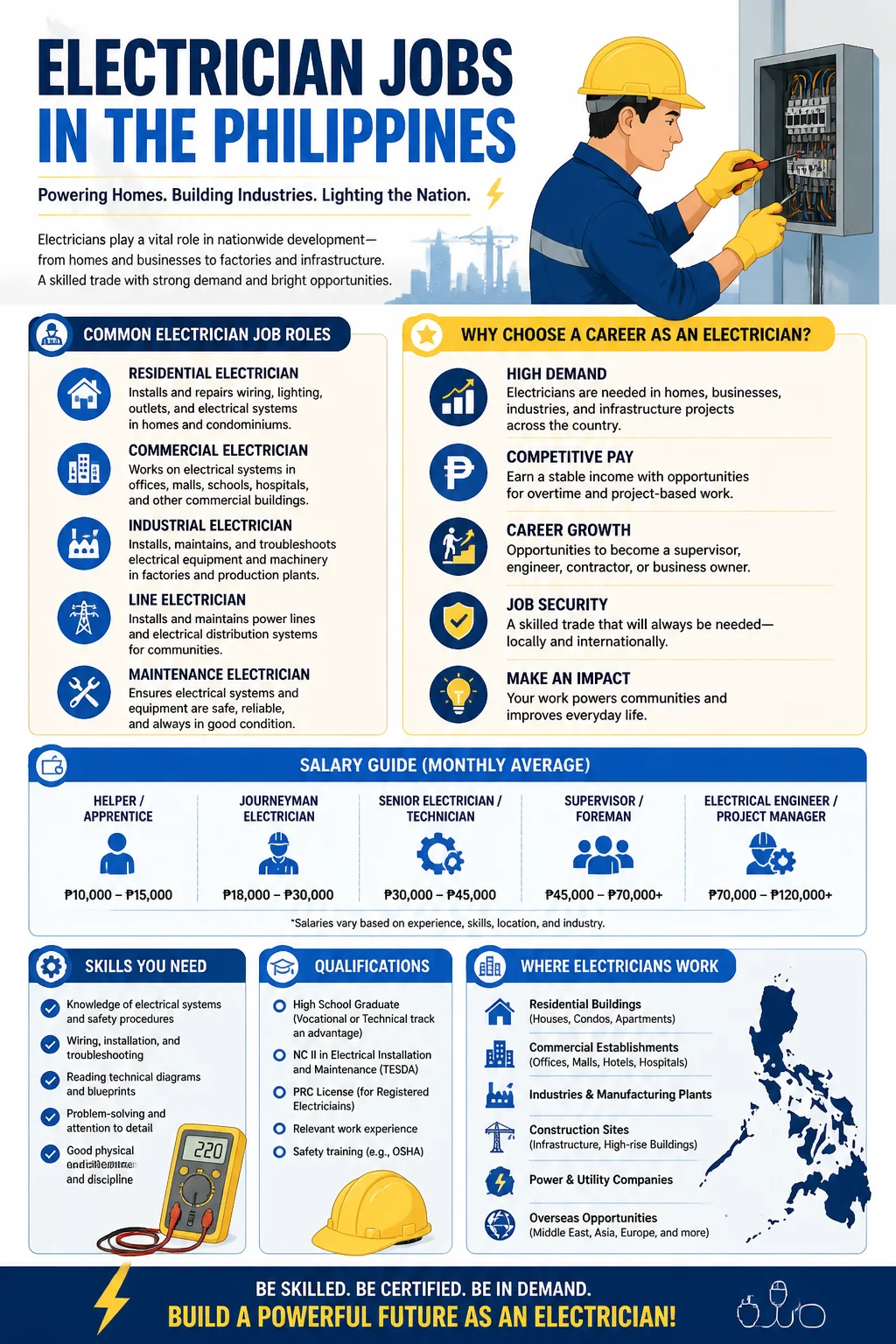
Big difference if you're in Metro Manila versus somewhere like Davao. City rates tend to be higher but so is the cost of living and commute stress.
What employers actually look for
Most want at least a TESDA NC II certificate in electrical installation. Without it you're fighting an uphill battle on legit sites. Some also ask for experience with PLCs or solar setups these days because those jobs are growing.
- Basic knowledge of Philippine Electrical Code
- Safety habits that aren't just on paper
- Ability to read blueprints without guessing
- Own set of tools is a plus
Soft skills matter too. Showing up on time and not arguing with the foreman every day goes further than people admit.
How to actually find the work
JobStreet and Indeed PH are obvious starting points but Facebook groups for construction workers in the Philippines sometimes have postings days earlier. Word of mouth from other electricians still works surprisingly well.
Walk-ins at big contractors can pay off if you bring your certs and look presentable. I've heard of guys getting hired the same day that way.
Thing is, many companies post for helpers first then promote internally once they see you can actually do the work. Don't sleep on those entry roles.
Daily reality on site
It's hot, dusty, and you're on your feet most of the day. Heights are part of the job if you're doing commercial builds. Rainy season can shut things down for days so income isn't always predictable.
But you finish a project and see something you helped wire actually working. That's pretty satisfying compared to desk jobs.
Safety gear isn't optional even if some old-timers skip it. One bad shock and you're out for weeks or worse.