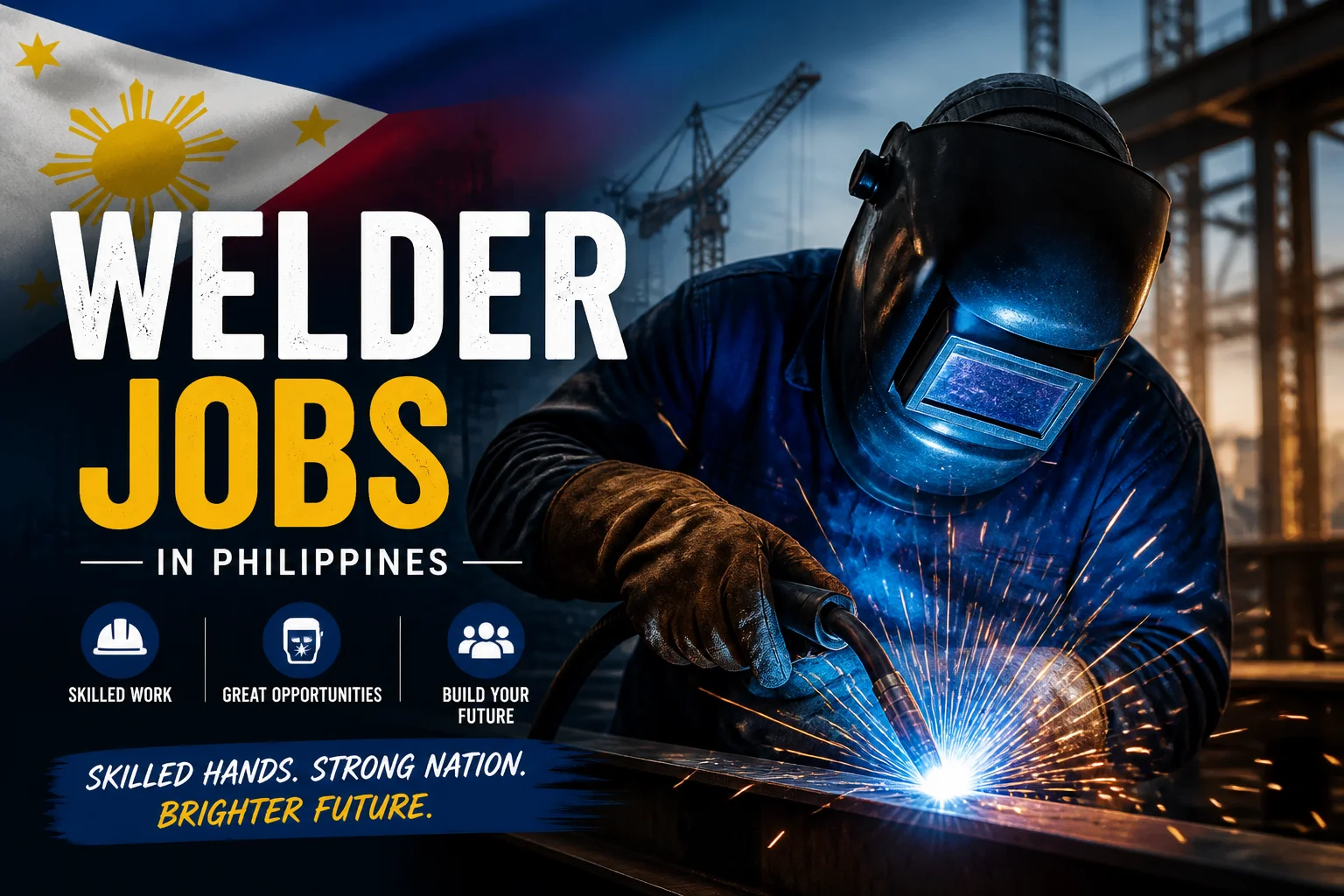

So you're thinking about welder jobs in the Philippines
There's steady work if you know where to look. Construction keeps growing and factories always need hands on deck for repairs or new builds. Not gonna lie, it's physical work but the pay can be decent once you get some experience under your belt.
From what I've seen, most openings pop up in Metro Manila, Cebu, and industrial spots like Batangas. Shipyards and steel fabrication shops hire pretty often too.
Common types of welding gigs right now
You'll see SMAW and GTAW roles everywhere. Some places want guys who can handle both. Then there's pipeline work and structural welding on big projects.
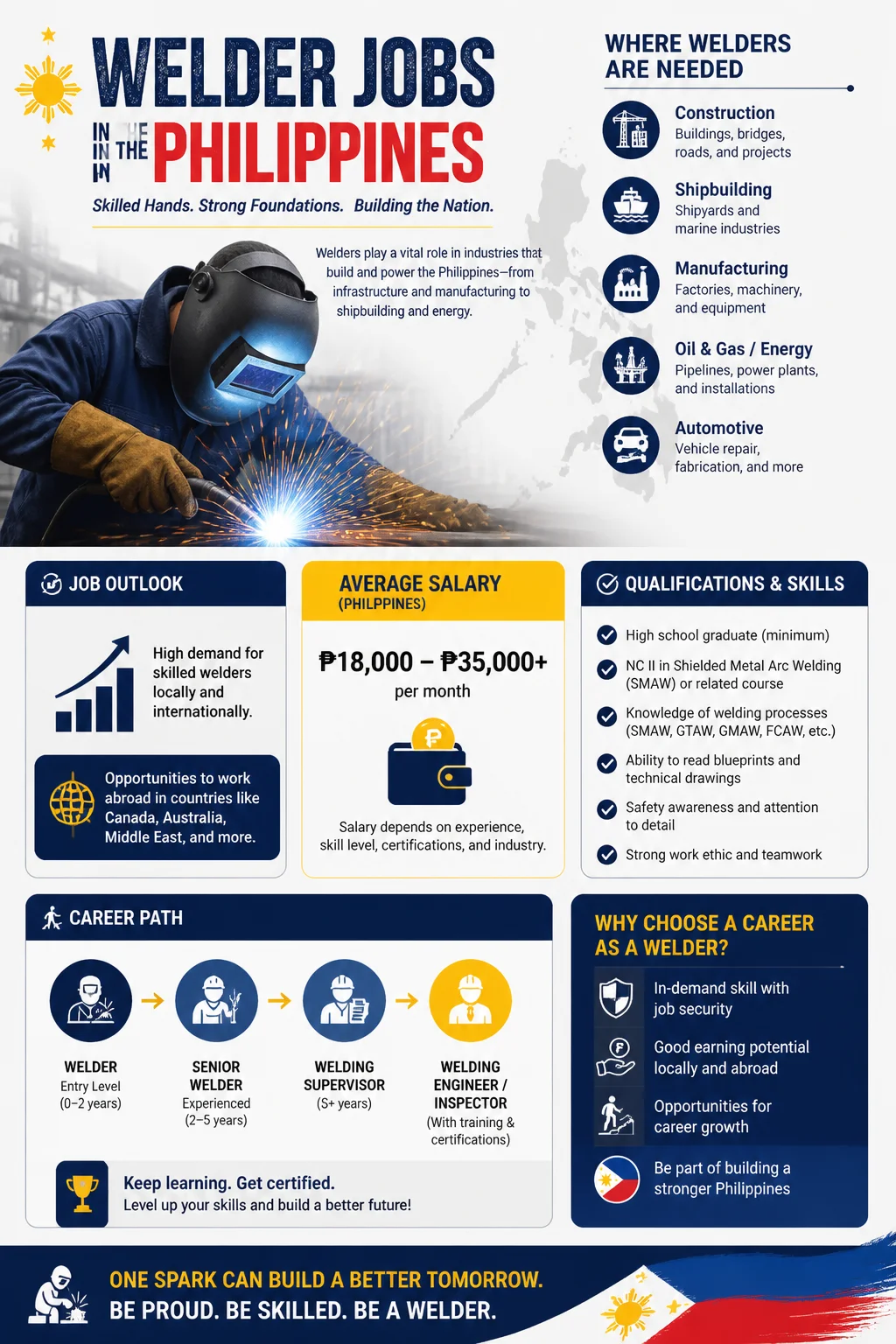
- Construction sites needing structural welders
- Manufacturing plants for maintenance crews
- Marine and ship repair yards
- Auto shops and heavy equipment repair
Honestly speaking, having multiple certifications opens more doors fast.
What skills and papers do you actually need
TESDA NC II in Shielded Metal Arc Welding is the basic starting point most employers ask for. Add GTAW or flux-cored if you can. Safety training like OSHA or basic first aid helps too.
Experience beats everything though. Even a year or two of solid shop time gets you noticed quicker than fresh grads. And yeah, being able to read blueprints is a big plus that not everyone has.
Thing is, some companies run their own tests on the spot. You show up, weld a couple joints, and they decide right there.
Where the money sits these days
Entry level welders pull around 12,000 to 18,000 pesos monthly. With a couple years experience and the right certs, it jumps to 20k-30k. Overtime and project allowances push it higher on big jobs.
Benefits vary a lot. Some outfits give free meals and transportation while others don't. Ask about that during interviews.
How to actually land one
Check JobStreet and Indeed daily. Local Facebook groups for welders in the Philippines also post openings that don't always hit the big sites.
Walk-in applications still work at fabrication shops outside the city. Print a few resumes, bring your TESDA certs, and just show up early. It sounds old school but it works.
Recruitment agencies handle a chunk of the overseas-linked roles too, but read contracts carefully if that's your route.
Keep your tools ready and maybe practice a few welds the night before any test. Small things like that make a difference.