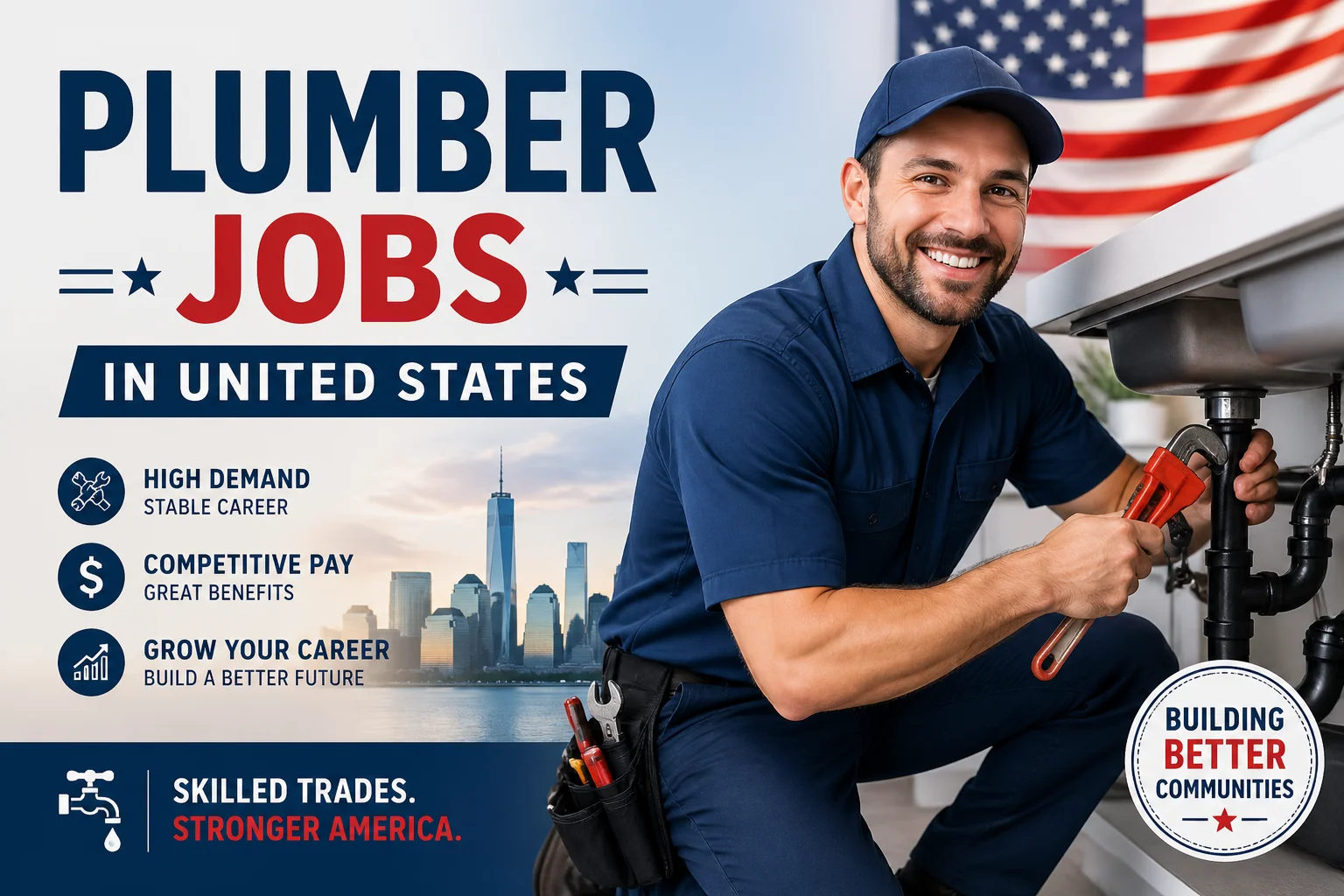

Plumber Jobs in the United States: A Comprehensive Guide
The plumbing industry in the United States offers a stable and rewarding career path for skilled professionals. With a growing demand for qualified plumbers due to infrastructure development, residential needs, and commercial projects, plumber jobs are abundant across the country. This guide explores the landscape of plumber jobs in the US, including job opportunities, salary expectations, required skills, and how to get started in this field.
Why Choose a Career as a Plumber?
Plumbing is an essential trade that ensures the functionality of water systems, sanitation, and heating in homes and businesses. Choosing a career as a plumber comes with several advantages:
- Job Security: The need for plumbers remains consistent, as water systems are critical to daily life and infrastructure.
- Good Earnings: Plumbers often earn competitive wages, with opportunities for overtime and self-employment.
- Variety of Work: From residential repairs to large-scale commercial projects, the job offers diverse challenges.
- Path to Entrepreneurship: Many plumbers start their own businesses, providing flexibility and higher income potential.
Types of Plumber Jobs in the United States
Plumber jobs in the US vary based on specialization, experience, and location. Here are some common roles in the industry:
- Residential Plumber: Focuses on installing and repairing plumbing systems in homes, including sinks, toilets, and water heaters.
- Commercial Plumber: Works on larger projects such as office buildings, schools, and hospitals, dealing with complex piping systems.
- Service and Repair Plumber: Specializes in troubleshooting and fixing issues like leaks, clogs, and pipe bursts.
- Pipefitter: Installs and maintains high-pressure piping systems for industrial settings like power plants or factories.
- Plumbing Inspector: Ensures that plumbing installations comply with local codes and regulations.
Salary Expectations for Plumbers in the US
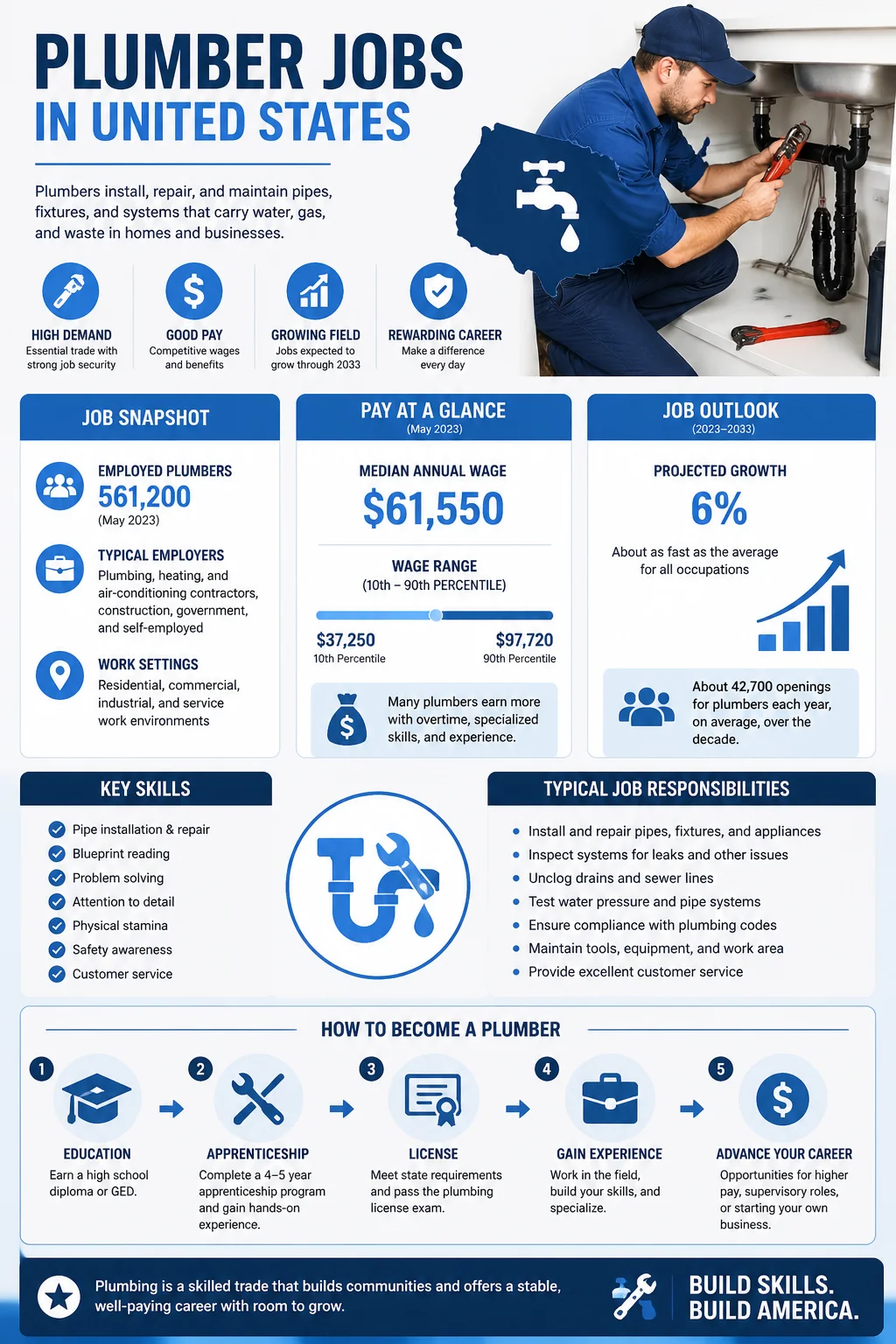
According to the U.S. Bureau of Labor Statistics (BLS), the median annual wage for plumbers, pipefitters, and steamfitters was approximately $60,090 as of recent data. However, salaries can vary widely based on factors such as:
- Location: Plumbers in states like California, New York, and Massachusetts often earn higher wages due to the cost of living and demand.
- Experience: Entry-level plumbers may start at around $35,000 annually, while seasoned professionals can earn upwards of $90,000.
- Specialization: Those in niche areas like industrial pipefitting may command higher pay.
Additionally, plumbers who work overtime or run their own businesses often see increased earnings.
Skills and Qualifications Needed for Plumber Jobs
Becoming a plumber requires a mix of technical skills, physical stamina, and formal training. Key requirements include:
- Technical Knowledge: Understanding plumbing systems, blueprints, and tools is essential.
- Problem-Solving: Plumbers must diagnose issues quickly and provide effective solutions.
- Physical Fitness: The job often involves lifting heavy materials, working in tight spaces, and standing for long periods.
- Communication Skills: Interacting with clients and explaining issues or solutions is crucial, especially for self-employed plumbers.
Most plumbers start with a high school diploma or equivalent, followed by an apprenticeship program that combines on-the-job training with classroom instruction. Licensing requirements vary by state, but most require plumbers to pass an exam after completing their apprenticeship.
How to Find Plumber Jobs in the United States
With the rise of online job platforms, finding plumber jobs has become easier than ever. Here are some tips to land a position:
- Job Boards: Websites like Indeed, Monster, and LinkedIn frequently list plumber openings across the US.
- Trade Unions: Joining a union like the United Association (UA) can provide access to apprenticeships and job opportunities.
- Local Contractors: Many plumbing companies hire directly, so networking with local businesses can lead to openings.
- Vocational Schools: These institutions often have job placement services for graduates of plumbing programs.
Job Outlook for Plumbers in the US
The BLS projects that employment for plumbers, pipefitters, and steamfitters will grow by about 5% from 2022 to 2032, which is faster than the average for all occupations. Factors driving this growth include aging infrastructure, new construction projects, and the need to replace retiring workers. This makes now an excellent time to enter the field.
Challenges in the Plumbing Industry
While plumber jobs offer many benefits, there are challenges to consider:
- Physical Demands: The job can be physically taxing, with risks of injury from heavy lifting or working in hazardous conditions.
- Irregular Hours: Emergency repairs may require working nights, weekends, or holidays.
- Competition: In some areas, the market may be saturated, requiring plumbers to stand out through skills or customer service.
Conclusion
Plumber jobs in the United States provide a promising career path for those willing to invest in training and hard work. With competitive salaries, job security, and opportunities for growth, plumbing is a trade worth considering. Whether you're just starting out or looking to advance in the field, the demand for skilled plumbers ensures a bright future. Start exploring job openings or apprenticeship programs today to kickstart your career in this essential industry.