
Welder Jobs in the United States: Opportunities and Insights
Welding is a critical trade in the United States, offering a stable and rewarding career path for skilled individuals. With industries such as construction, manufacturing, and infrastructure development thriving, the demand for qualified welders continues to grow. This article explores the landscape of welder jobs in the US, including job opportunities, salary expectations, required skills, and how to get started in this field.
What Are Welder Jobs?
Welder jobs involve joining metal parts together using heat and specialized equipment. Welders work with a variety of materials, including steel, aluminum, and other alloys, to create structures, repair machinery, or fabricate components. They play a vital role in industries like construction, automotive, aerospace, and energy. From building bridges to manufacturing vehicles, welders are essential to keeping the country’s infrastructure and economy running smoothly.
Types of Welder Jobs in the United States
There are several specialized roles within the welding profession, each with unique requirements and work environments. Some common types of welder jobs include:
- Structural Welders: Focus on constructing buildings, bridges, and other large structures using steel beams and frameworks.
- Pipe Welders: Specialize in welding pipes for oil, gas, and water systems, often working in high-pressure environments.
- Manufacturing Welders: Work in factories to assemble products like machinery, vehicles, and consumer goods.
- Underwater Welders: Perform welding tasks underwater, often for offshore oil rigs or ship repairs, requiring additional training and certifications.
- Aerospace Welders: Work on aircraft and spacecraft components, adhering to strict safety and quality standards.
Job Outlook and Demand for Welders in the US
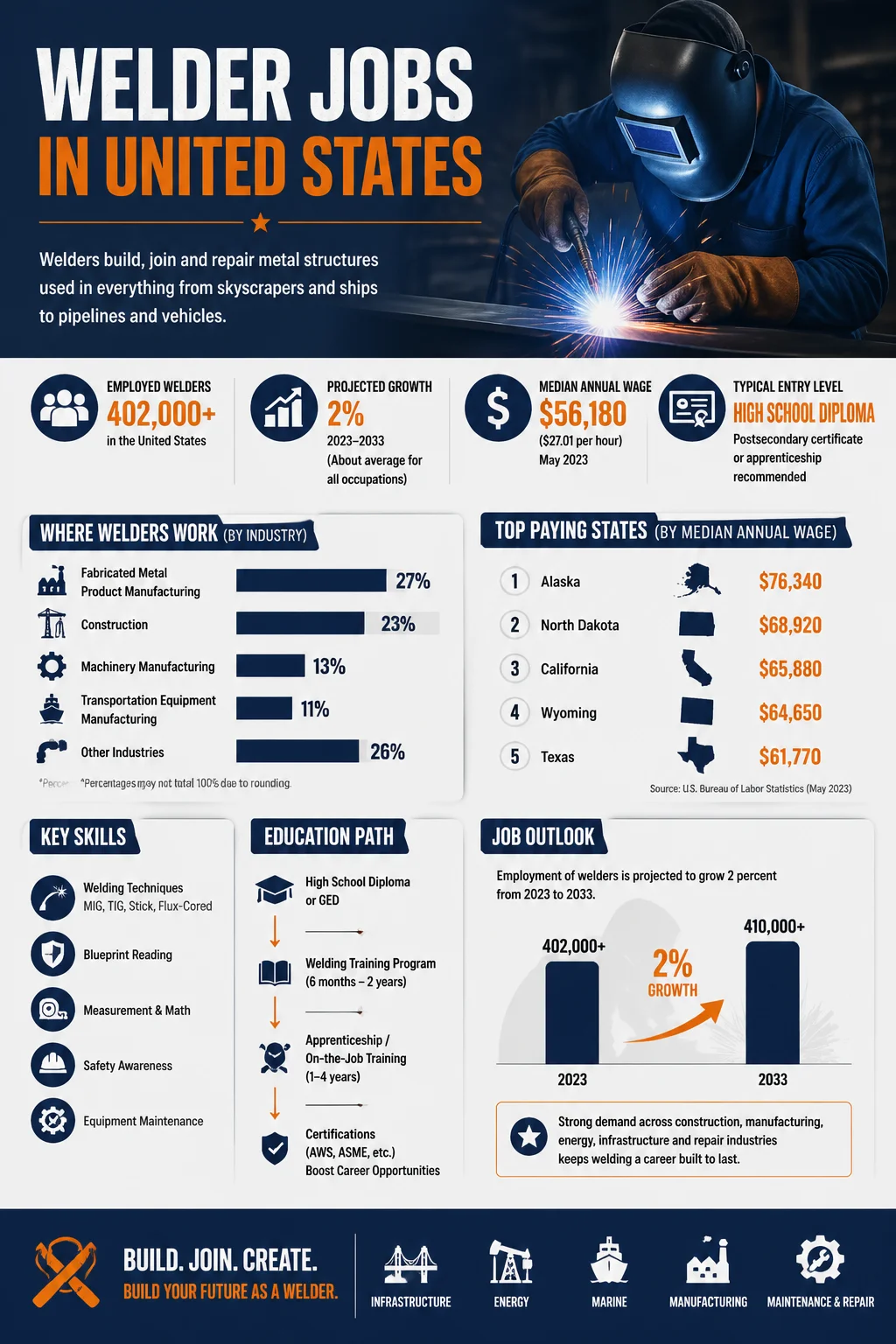
The demand for welders in the United States remains strong due to ongoing infrastructure projects, industrial growth, and the need to replace retiring workers. According to the U.S. Bureau of Labor Statistics (BLS), employment for welders, cutters, solderers, and brazers is projected to grow at a steady rate over the next decade. Many employers report a shortage of skilled welders, which creates excellent opportunities for those entering the field.
States like Texas, California, and Louisiana, which have large manufacturing and energy sectors, often have the highest demand for welders. Additionally, urban areas with significant construction projects offer numerous job openings for structural welders.
Salary Expectations for Welders
The salary for welders in the US varies based on experience, location, and specialization. On average, welders earn a median annual wage of around $47,000, according to the BLS. Entry-level welders may start at approximately $30,000 per year, while experienced professionals or those in high-demand specialties like underwater welding can earn upwards of $70,000 annually.
Factors influencing welder salaries include:
- Location: Welders in states with high demand or higher living costs, such as California or New York, often earn more.
- Industry: Aerospace and energy sector welders typically earn higher wages compared to those in general manufacturing.
- Certifications: Holding certifications from organizations like the American Welding Society (AWS) can boost earning potential.
Skills and Qualifications Needed for Welder Jobs
Becoming a welder requires a combination of technical skills, physical stamina, and attention to detail. Key skills and qualifications include:
- Technical Proficiency: Knowledge of welding techniques such as MIG, TIG, and stick welding is essential.
- Blueprint Reading: Welders must interpret technical drawings and specifications accurately.
- Safety Awareness: Understanding safety protocols is critical due to the hazards of working with high heat and heavy materials.
- Physical Fitness: The job often involves long hours of standing, lifting, and working in challenging environments.
- Certifications: Many employers prefer or require certifications from recognized bodies like the AWS.
How to Start a Career in Welding
If you’re interested in pursuing a career as a welder, follow these steps to get started:
- Education: Complete a high school diploma or GED, focusing on courses in math, science, and shop classes if possible.
- Training: Enroll in a welding program at a vocational school or community college to learn the fundamentals.
- Apprenticeships: Gain hands-on experience through apprenticeships or on-the-job training programs offered by employers or unions.
- Certifications: Obtain industry-recognized certifications to enhance your employability and demonstrate your skills.
- Job Search: Look for entry-level welder jobs in industries like construction or manufacturing to build experience.
Challenges and Rewards of a Welding Career
While welding offers many benefits, it also comes with challenges. Welders often work in physically demanding conditions, including extreme temperatures and confined spaces. The job can also pose health risks if proper safety measures aren’t followed. However, the rewards are significant, including job security, competitive pay, and the satisfaction of building tangible, lasting structures.
Conclusion
Welder jobs in the United States provide a promising career path for individuals with the right skills and determination. With a growing demand across various industries, now is an excellent time to explore opportunities in this field. Whether you’re just starting out or looking to advance your welding career, gaining the necessary training and certifications can open doors to a fulfilling and financially rewarding profession.