
Welder Jobs in South Africa: Opportunities and Career Guide
Welding is a critical skill in South Africa’s industrial and construction sectors, offering numerous job opportunities for skilled professionals. Welder jobs in South Africa are in high demand due to ongoing infrastructure projects, mining operations, and manufacturing needs. This comprehensive guide explores the landscape of welder jobs, required skills, salary expectations, and how to secure a position in this rewarding field.
What Do Welders Do?
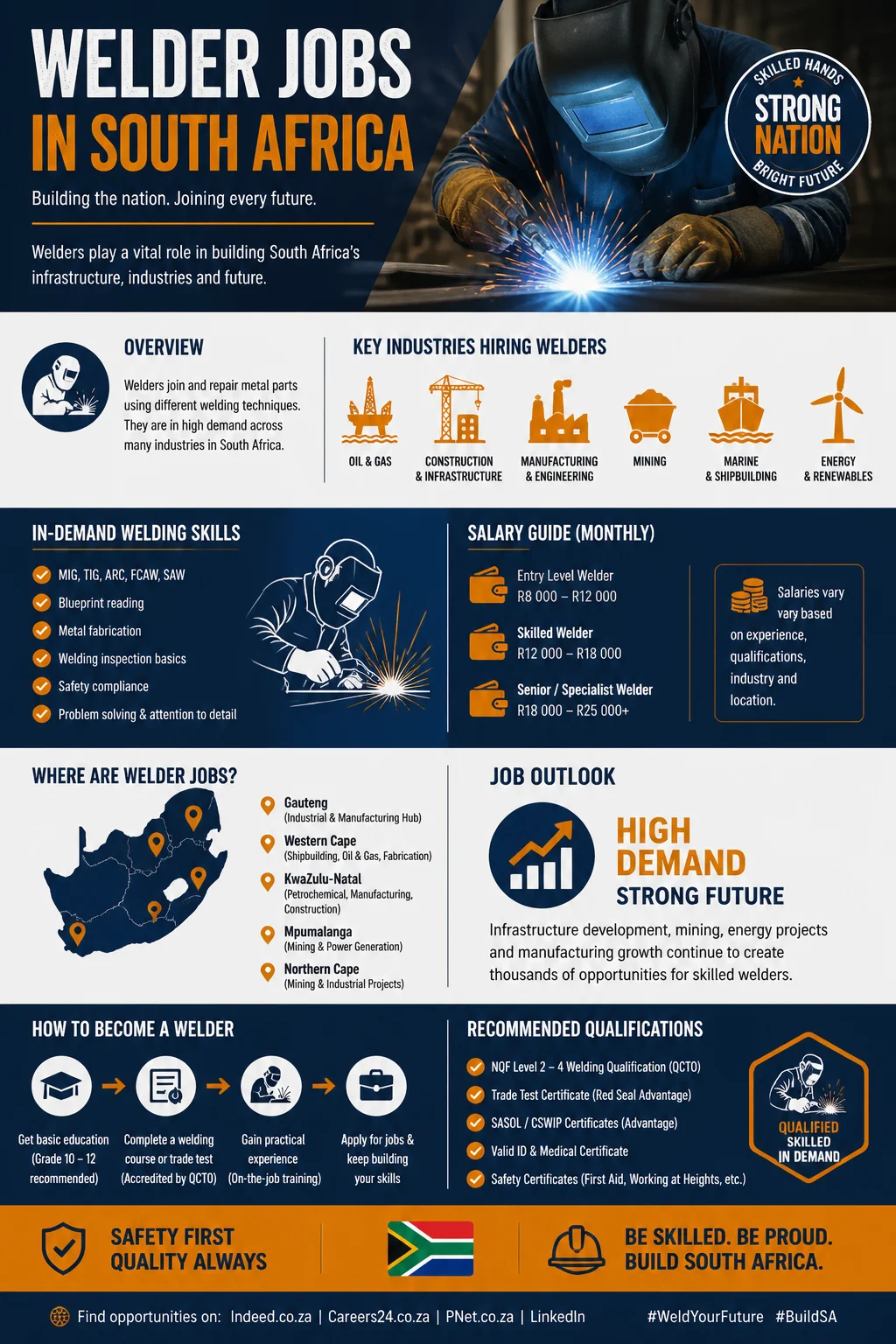
Welders are responsible for joining metal parts together using various welding techniques such as arc welding, MIG welding, and TIG welding. They work across industries like construction, automotive, mining, and shipbuilding. In South Africa, welders often contribute to large-scale projects, including building bridges, pipelines, and industrial machinery. Their role requires precision, safety awareness, and technical expertise to ensure structural integrity.
Types of Welder Jobs in South Africa
The welding profession offers diverse opportunities depending on specialization and industry. Here are some common types of welder jobs available in South Africa:
- Structural Welders: Focus on constructing buildings, bridges, and other large structures.
- Pipe Welders: Specialize in welding pipelines for oil, gas, and water systems, often in the mining and energy sectors.
- Underwater Welders: Perform high-risk welding tasks underwater, typically for marine and offshore projects.
- Boilermaker Welders: Combine welding with metal fabrication to create and repair boilers and pressure vessels.
- Automotive Welders: Work on vehicle repairs and customizations in the automotive industry.
Skills and Qualifications Needed for Welder Jobs
To succeed in welder jobs in South Africa, candidates must possess a combination of technical skills and formal training. Key requirements include:
- Technical Training: A certificate or diploma in welding from a recognized institution, such as a Technical and Vocational Education and Training (TVET) college, is often necessary.
- Certification: Welders may need to obtain certifications like the South African Institute of Welding (SAIW) certification to validate their skills.
- Physical Fitness: The job often involves working in challenging environments, requiring strength and stamina.
- Safety Knowledge: Understanding safety protocols is crucial to prevent accidents while handling high-temperature equipment.
- Precision and Attention to Detail: Welders must produce accurate and durable joins to meet industry standards.
Salary Expectations for Welders in South Africa
The salary for welder jobs in South Africa varies based on experience, specialization, and location. Entry-level welders can expect to earn between R8,000 and R12,000 per month, while experienced welders or those in high-demand sectors like underwater welding may earn upwards of R25,000 per month. Boilermakers and specialized welders often command higher wages due to the complexity of their work. Additionally, working in remote areas such as mining towns may include bonuses or allowances.
Where to Find Welder Jobs in South Africa
Job seekers can explore several platforms and strategies to find welder jobs in South Africa:
- Online Job Portals: Websites like Indeed, Careers24, and PNet regularly list welding vacancies across the country.
- Recruitment Agencies: Specialized agencies focusing on industrial and technical roles can connect candidates with employers.
- Networking: Joining industry groups or attending trade shows can help build connections with potential employers.
- Apprenticeships: Many companies offer apprenticeships for aspiring welders, providing hands-on training and a pathway to full-time employment.
Challenges and Rewards of a Welding Career
While welding offers stable employment and competitive pay, it comes with challenges such as exposure to hazardous conditions and physically demanding work. However, the rewards include job security, opportunities for specialization, and the satisfaction of contributing to major infrastructure projects. With South Africa’s continued investment in development, welders remain essential to the nation’s growth.
Tips for Landing a Welder Job in South Africa
To stand out in the competitive job market, aspiring welders should consider the following tips:
- Build a Strong Portfolio: Showcase completed projects or certifications to demonstrate your skills to potential employers.
- Stay Updated: Learn about new welding technologies and techniques to remain relevant in the industry.
- Relocate if Necessary: Be open to working in industrial hubs like Johannesburg, Cape Town, or mining regions for better opportunities.
- Enhance Soft Skills: Communication and teamwork are vital when working on large projects with diverse teams.
Future Outlook for Welder Jobs in South Africa
The future of welder jobs in South Africa looks promising, driven by government-led infrastructure initiatives and growth in the mining and energy sectors. As industries adopt advanced welding technologies, professionals who upskill and adapt to automation will have a competitive edge. For those willing to invest in training and certification, a career in welding offers long-term stability and growth potential.