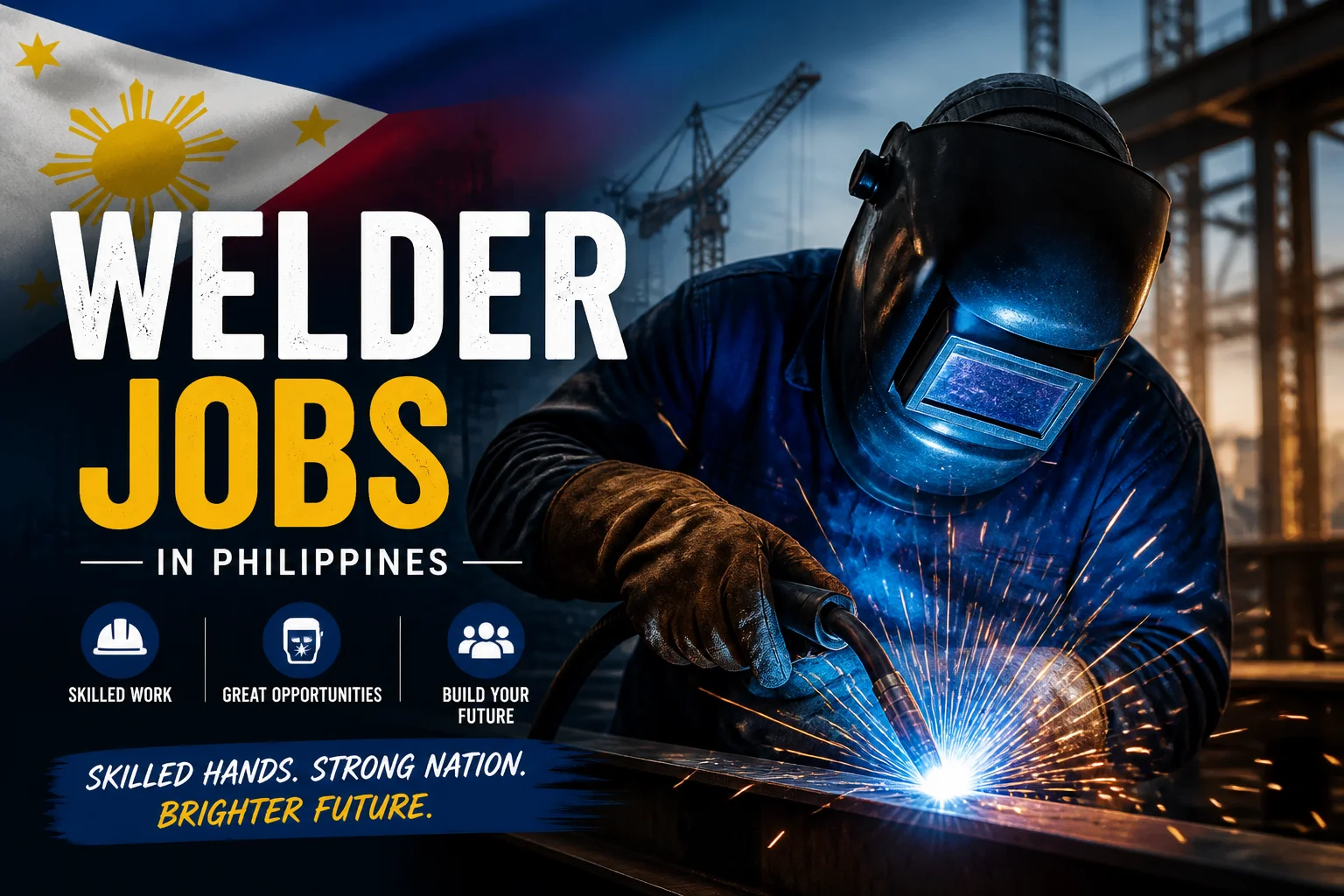
Tig Welder
Company
Westwood Law Firm
Location
Quezon City, Metro Manila
Via
via LinkedIn
Job Description
A TIG (Tungsten Inert Gas) welder is a skilled professional who uses TIG welding techniques to join metal parts, primarily in industries like aerospace, automotive, and manufacturing. They interpret blueprints, prepare materials, and execute precise welds with a high degree of accuracy and quality.
• Welding:
• Performing TIG welding on various metals like steel, aluminum, and stainless steel, following technical drawings and specifications.
• Material Preparation:
• Cutting, shaping, and preparing metal components for welding, ensuring proper fit and alignment.
• Equipment Operation:
• Setting up and operating TIG welding equipment, including gas tanks, torches, and regulators.
• Quality Control:
• Inspecting welds for defects, ensuring they meet quality standards and project requirements.
• Safety:
• Adhering to safety procedures and wearing appropriate personal protective equipment (PPE).
• Maintenance:
• Maintaining welding equipment and tools, troubleshooting malfunctions, and keeping the work area clean.
• Collaboration:
• Working with team members and supervisors to ensure efficient workflow and project completion.
Required Skills
• Technical Skills:
• Proficiency in TIG welding techniques, blueprint reading, and knowledge of metallurgy.
• Physical Abilities:
• Good hand-eye coordination, manual dexterity, and the ability to work in various positions (flat, vertical, overhead).
• Soft Skills:
• Attention to detail, problem-solving, and the ability to follow instructions and work independently or as part of a team.
• Education and Experience:
• High school diploma or equivalent, along with relevant training or certification in TIG welding.
Industries
TIG welders are employed in diverse industries, including:
• Aerospace: Welding components for aircraft and spacecraft.
• Automotive: Fabricating vehicle parts and components.
• Manufacturing: Producing a wide range of metal products and structures.
• Construction: Joining metal structures for buildings and infrastructure.
• Other: Welding for various applications in engineering, fabrication, and repair.
To be a TIG welder, you'll generally need a combination of education, technical skills, and personal attributes. A high school diploma or equivalent, along with vocational training in welding, is a common starting point. Specific TIG welding certifications are often required or preferred, and practical experience, including the ability to read blueprints and follow safety procedures, is essential.
La loma quezon city area
18 and up
Fully Vaccinated
Tig (Gtaw)
• Education:
• A high school diploma or GED is typically a minimum requirement. Additional vocational or technical training in welding, particularly with a focus on TIG welding (also known as GTAW), is highly beneficial.
• Technical Skills:
• TIG Welding Mastery: Proficiency in the Gas Tungsten Arc Welding (GTAW) process, including various joint types (butt, lap, corner, tee, edge), is crucial.
• Material Knowledge: Understanding the properties of different metals, such as stainless steel, aluminum, and carbon steel, and the appropriate filler metals for each, is important.
• Equipment Operation: Familiarity with TIG welding equipment, including power sources, torches, gas supplies, and filler metal feeding, is essential.
• Blueprint Reading: The ability to interpret technical drawings and blueprints is necessary for accurately interpreting project specifications.
• Safety Procedures: Strict adherence to welding safety practices and procedures is paramount to prevent accidents and ensure quality work.
• Soft Skills:
• Attention to Detail: TIG welding requires meticulous attention to detail to produce high-quality, defect-free welds, especially in critical applications.
• Problem-Solving: The ability to diagnose and correct welding issues, such as weld defects or material warping, is a valuable skill.
• Patience and Focus: TIG welding demands patience, focus, and steady hands to maintain a consistent arc and puddle.
• Manual Dexterity: Precise hand movements and the ability to work in confined spaces are important for TIG welding.
• Experience:
• While specific years of experience can vary, practical experience in TIG welding, potentially through internships or apprenticeships, is often required or preferred.
• Certification:
• Welding certifications, like those offered by the American Welding Society, can enhance your job prospects and demonstrate your skills and dedication.
In addition to these requirements, employers may also look for:
• Knowledge of other welding processes:
• While TIG welding is the primary focus, familiarity with other processes like MIG (Metal Inert Gas) or SMAW (Shielded Metal Arc Welding) can be an advantage.
• Ability to work in all positions:
• Being able to weld in various positions (flat, horizontal, vertical, overhead) is often a requirement.
• Willingness to work flexible hours:
• TIG welders may need to work overtime or adjust their schedules to meet project deadlines.
• Good moral character:
• This is a common requirement for many jobs, including welding.
By focusing on developing these requirements, you can increase your chances of success as a TIG welder.
• Welding:
• Performing TIG welding on various metals like steel, aluminum, and stainless steel, following technical drawings and specifications.
• Material Preparation:
• Cutting, shaping, and preparing metal components for welding, ensuring proper fit and alignment.
• Equipment Operation:
• Setting up and operating TIG welding equipment, including gas tanks, torches, and regulators.
• Quality Control:
• Inspecting welds for defects, ensuring they meet quality standards and project requirements.
• Safety:
• Adhering to safety procedures and wearing appropriate personal protective equipment (PPE).
• Maintenance:
• Maintaining welding equipment and tools, troubleshooting malfunctions, and keeping the work area clean.
• Collaboration:
• Working with team members and supervisors to ensure efficient workflow and project completion.
Required Skills
• Technical Skills:
• Proficiency in TIG welding techniques, blueprint reading, and knowledge of metallurgy.
• Physical Abilities:
• Good hand-eye coordination, manual dexterity, and the ability to work in various positions (flat, vertical, overhead).
• Soft Skills:
• Attention to detail, problem-solving, and the ability to follow instructions and work independently or as part of a team.
• Education and Experience:
• High school diploma or equivalent, along with relevant training or certification in TIG welding.
Industries
TIG welders are employed in diverse industries, including:
• Aerospace: Welding components for aircraft and spacecraft.
• Automotive: Fabricating vehicle parts and components.
• Manufacturing: Producing a wide range of metal products and structures.
• Construction: Joining metal structures for buildings and infrastructure.
• Other: Welding for various applications in engineering, fabrication, and repair.
To be a TIG welder, you'll generally need a combination of education, technical skills, and personal attributes. A high school diploma or equivalent, along with vocational training in welding, is a common starting point. Specific TIG welding certifications are often required or preferred, and practical experience, including the ability to read blueprints and follow safety procedures, is essential.
La loma quezon city area
18 and up
Fully Vaccinated
Tig (Gtaw)
• Education:
• A high school diploma or GED is typically a minimum requirement. Additional vocational or technical training in welding, particularly with a focus on TIG welding (also known as GTAW), is highly beneficial.
• Technical Skills:
• TIG Welding Mastery: Proficiency in the Gas Tungsten Arc Welding (GTAW) process, including various joint types (butt, lap, corner, tee, edge), is crucial.
• Material Knowledge: Understanding the properties of different metals, such as stainless steel, aluminum, and carbon steel, and the appropriate filler metals for each, is important.
• Equipment Operation: Familiarity with TIG welding equipment, including power sources, torches, gas supplies, and filler metal feeding, is essential.
• Blueprint Reading: The ability to interpret technical drawings and blueprints is necessary for accurately interpreting project specifications.
• Safety Procedures: Strict adherence to welding safety practices and procedures is paramount to prevent accidents and ensure quality work.
• Soft Skills:
• Attention to Detail: TIG welding requires meticulous attention to detail to produce high-quality, defect-free welds, especially in critical applications.
• Problem-Solving: The ability to diagnose and correct welding issues, such as weld defects or material warping, is a valuable skill.
• Patience and Focus: TIG welding demands patience, focus, and steady hands to maintain a consistent arc and puddle.
• Manual Dexterity: Precise hand movements and the ability to work in confined spaces are important for TIG welding.
• Experience:
• While specific years of experience can vary, practical experience in TIG welding, potentially through internships or apprenticeships, is often required or preferred.
• Certification:
• Welding certifications, like those offered by the American Welding Society, can enhance your job prospects and demonstrate your skills and dedication.
In addition to these requirements, employers may also look for:
• Knowledge of other welding processes:
• While TIG welding is the primary focus, familiarity with other processes like MIG (Metal Inert Gas) or SMAW (Shielded Metal Arc Welding) can be an advantage.
• Ability to work in all positions:
• Being able to weld in various positions (flat, horizontal, vertical, overhead) is often a requirement.
• Willingness to work flexible hours:
• TIG welders may need to work overtime or adjust their schedules to meet project deadlines.
• Good moral character:
• This is a common requirement for many jobs, including welding.
By focusing on developing these requirements, you can increase your chances of success as a TIG welder.
Frequently Asked Questions
Quick answers about Electrician Jobs
What is the daily minimum wage for electrician jobs in NCR Philippines as of 2026?
As per the National Wages and Productivity Commission, the minimum wage for electricians in NCR is PHP 650 per day effective 1 January 2026 for non-agricultural workers. Electricians receive an additional PHP 162.50 per hour for overtime beyond the standard 8-hour shift. This rate covers all licensed electrical work in private establishments.
What education and certification are required to qualify for electrician jobs in the Philippines?
Applicants need a high school diploma plus a TESDA National Certificate II in Electrical Installation and Maintenance issued after 2025 assessments. A minimum of two years documented experience in wiring or maintenance is mandatory for DOLE-registered contractors.
What documents are needed to apply for electrician positions through DOLE offices in 2026?
Submit a valid NC II certificate, NBI clearance issued within 30 days, birth certificate from PSA, and a medical certificate from a DOH-accredited clinic. Applications must be filed in person at the nearest Public Employment Service Office with two passport-size photos.
What are the standard working hours and leave benefits for electricians under Philippine labor law?
Electricians work eight hours daily for six days a week with a mandatory one-hour meal break. They are entitled to 12 paid sick leaves and five service incentive leaves per year plus 13th-month pay calculated at PHP 21,450 minimum for 2026.
Latest Articles