
Cleaning Staff Jobs in the United States: Opportunities and Insights
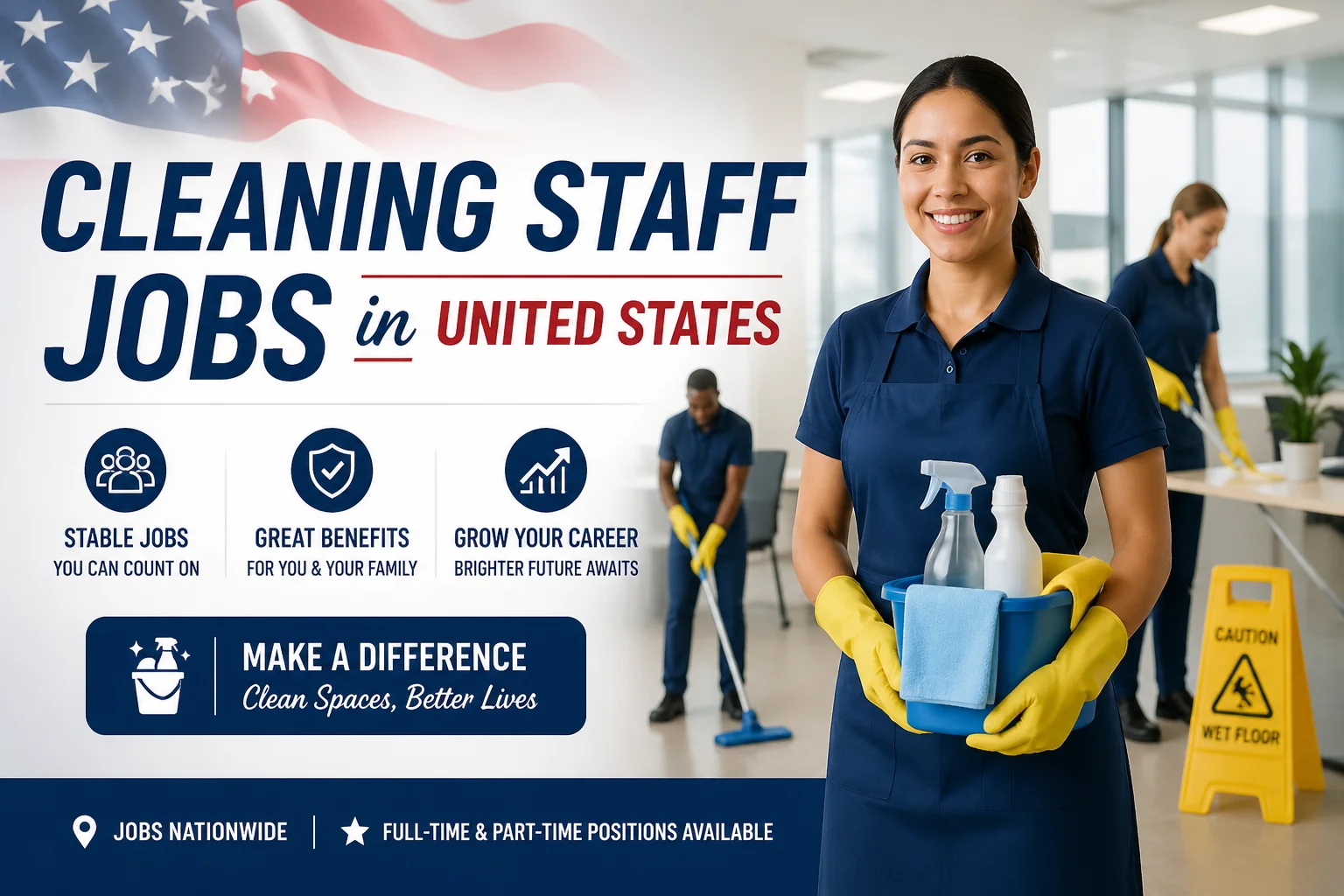
The demand for cleaning staff jobs in the United States has been steadily rising, driven by the need for cleanliness and hygiene across various industries. From hospitals to offices, schools to hotels, cleaning staff play a crucial role in maintaining safe and welcoming environments. This article explores the opportunities, requirements, benefits, and challenges of cleaning staff jobs in the US, helping job seekers understand this vital career path.
What Are Cleaning Staff Jobs?
Cleaning staff jobs encompass a wide range of roles focused on maintaining cleanliness and sanitation in different settings. These positions may include janitors, housekeepers, custodians, and commercial cleaners. Cleaning staff are responsible for tasks such as dusting, vacuuming, mopping, disinfecting surfaces, and managing waste. Depending on the workplace, their duties might also include specialized cleaning, such as handling biohazards in healthcare facilities or maintaining guest rooms in hotels.
Why Cleaning Staff Jobs Are in Demand in the US
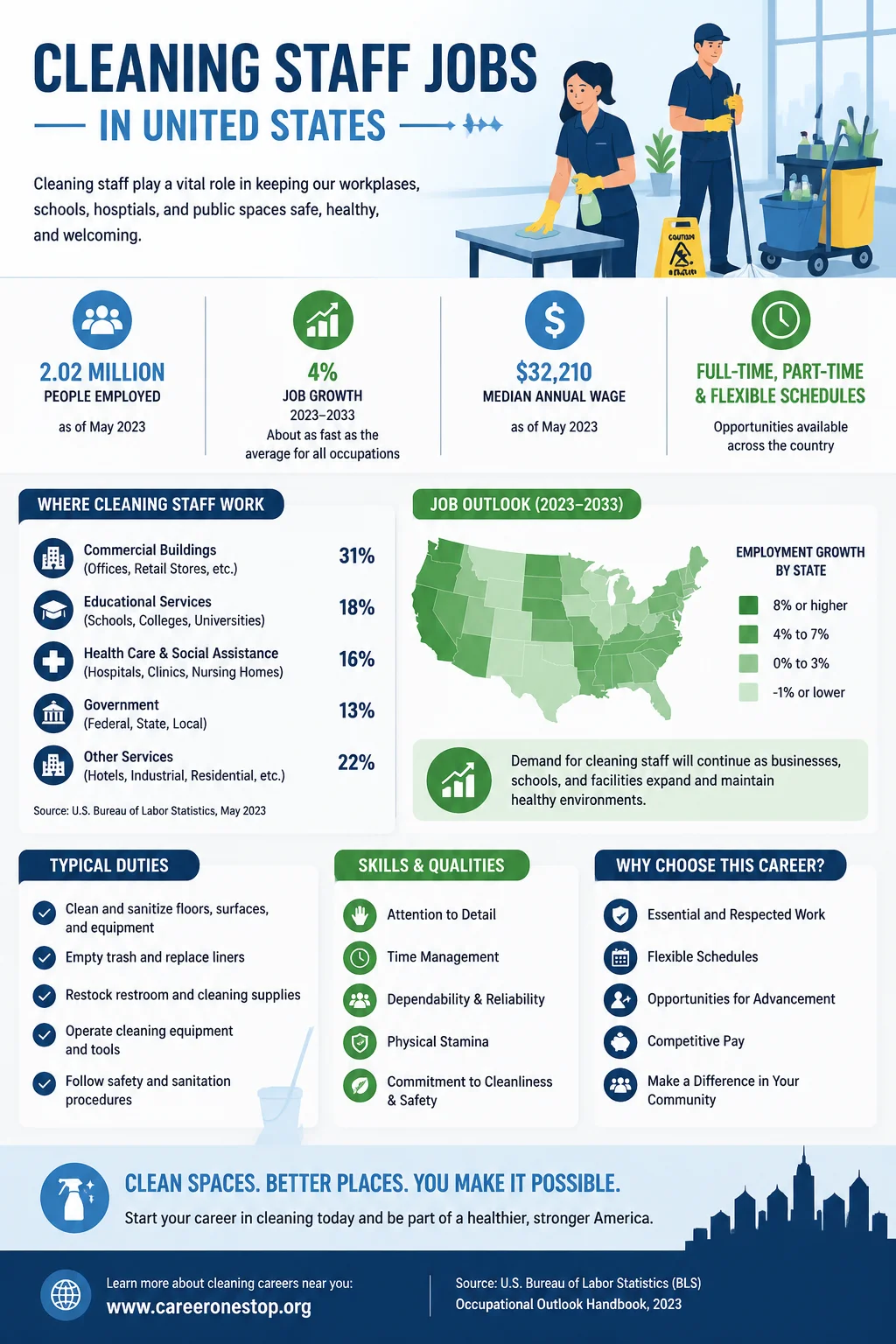
The need for cleaning staff has surged in recent years, particularly due to heightened awareness of hygiene following the COVID-19 pandemic. Businesses and institutions prioritize sanitation to protect employees, customers, and visitors. Additionally, the growth of industries like hospitality, healthcare, and education has created more opportunities for cleaning professionals. According to the U.S. Bureau of Labor Statistics, employment for janitors and building cleaners is projected to grow steadily, with thousands of openings each year due to turnover and retirements.
Types of Cleaning Staff Jobs in the United States
Cleaning staff roles vary depending on the industry and workplace. Here are some common types of cleaning jobs available in the US:
- Janitors and Custodians: Work in schools, offices, and public buildings, performing general cleaning and minor maintenance tasks.
- Housekeepers: Focus on cleaning guest rooms and common areas in hotels, resorts, and private residences.
- Commercial Cleaners: Handle cleaning for businesses, often during after-hours to avoid disrupting operations.
- Healthcare Cleaners: Specialize in sanitizing hospitals and clinics, adhering to strict health and safety protocols.
- Specialty Cleaners: Focus on niche areas like carpet cleaning, window washing, or post-construction cleanup.
Skills and Qualifications for Cleaning Staff Jobs
Most cleaning staff jobs do not require formal education, making them accessible to a wide range of job seekers. However, certain skills and qualities can help candidates stand out:
- Attention to Detail: Ensuring no spot is missed during cleaning tasks.
- Physical Stamina: Ability to perform repetitive tasks and lift heavy equipment if needed.
- Time Management: Completing tasks efficiently within set schedules.
- Communication Skills: Interacting with supervisors or clients professionally.
While a high school diploma may be preferred for some roles, on-the-job training is often provided. Certifications in areas like infection control or green cleaning can enhance employability, especially in healthcare or eco-friendly workplaces.
Benefits of Working as Cleaning Staff in the US
Cleaning staff jobs offer several advantages, particularly for those entering the workforce or seeking flexible employment:
- Entry-Level Opportunities: Minimal barriers to entry, with many positions requiring no prior experience.
- Flexible Schedules: Options for part-time, full-time, or night shifts to suit different lifestyles.
- Job Stability: Consistent demand across industries ensures long-term employment prospects.
- Health Benefits: Some employers offer medical, dental, and retirement plans, especially for full-time roles.
Challenges Faced by Cleaning Staff
Despite the benefits, cleaning staff jobs come with challenges. The work can be physically demanding, involving long hours on foot and exposure to cleaning chemicals. Additionally, some roles may require working odd hours, such as early mornings or late nights. Job seekers should also be prepared for repetitive tasks and, in some cases, limited career advancement without additional training or education.
How to Find Cleaning Staff Jobs in the US
Finding cleaning staff jobs is relatively straightforward, thanks to numerous online platforms and local resources. Popular job boards like Indeed, Monster, and LinkedIn list thousands of openings daily. Additionally, staffing agencies specializing in hospitality or facilities management can connect candidates with employers. Networking with local businesses, schools, or hospitals can also uncover unadvertised positions. When applying, tailor your resume to highlight relevant skills and availability for specific shifts.
Salary and Career Growth for Cleaning Staff
The average salary for cleaning staff in the US varies by location, industry, and experience. According to the Bureau of Labor Statistics, the median annual wage for janitors and building cleaners was around $30,000 as of recent data, with hourly rates ranging from $12 to $18. Higher pay is often available in healthcare settings or unionized positions. With experience, cleaning staff can move into supervisory roles like facilities manager or start their own cleaning business for greater earning potential.
Conclusion
Cleaning staff jobs in the United States offer a stable and accessible career path for individuals seeking immediate employment or flexible work arrangements. With growing demand across industries, these roles provide essential services while opening doors to personal and professional growth. Whether you’re starting your career or looking for a reliable job, the cleaning industry holds promising opportunities. Explore local listings, polish your skills, and take the first step toward a rewarding role in this field.