

Restaurant Jobs in the United States: Opportunities and Insights
The restaurant industry in the United States is a dynamic and ever-growing sector, offering a wide range of job opportunities for individuals seeking employment. From fast-food chains to fine dining establishments, restaurant jobs are vital to the economy and provide millions of Americans with careers and income. In this article, we’ll explore the types of restaurant jobs available, the skills required, and tips for landing a position in this bustling industry.
Why Choose a Career in the Restaurant Industry?
The restaurant sector is one of the largest employers in the U.S., with over 15 million people working in various roles. It offers flexibility, entry-level positions, and opportunities for career advancement. Whether you’re a student looking for part-time work or someone seeking a long-term career, the industry has something for everyone. Additionally, the demand for restaurant workers remains strong, especially post-pandemic, as the hospitality sector continues to recover and expand.
Types of Restaurant Jobs in the United States
Restaurant jobs vary widely in terms of responsibilities, skill requirements, and pay. Here are some of the most common roles:
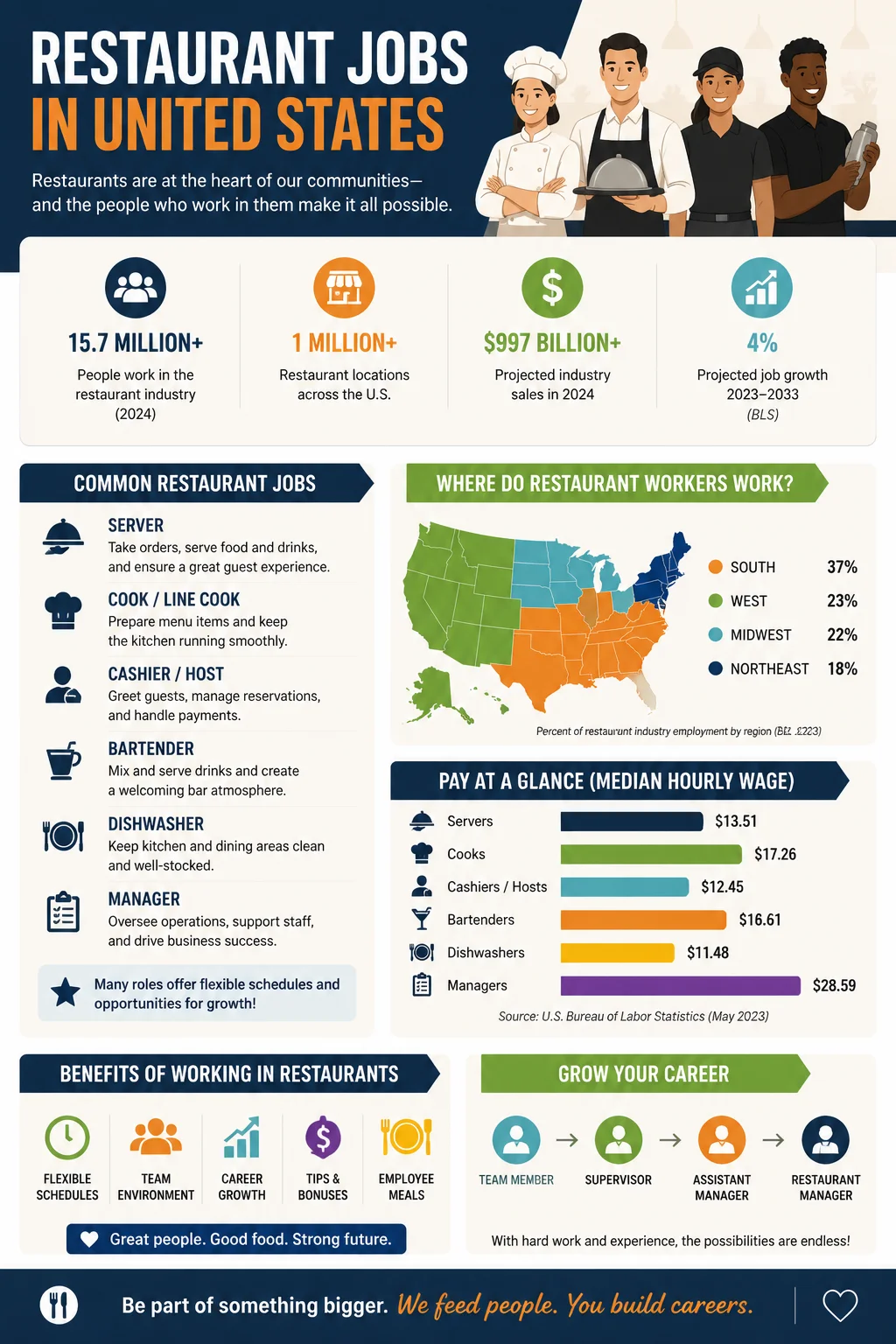
- Server/Waitstaff: Servers are the face of the restaurant, interacting directly with customers. They take orders, serve food and drinks, and ensure a pleasant dining experience. This role often relies on tips, which can significantly boost earnings.
- Chef/Cook: Chefs and cooks are responsible for preparing meals, managing kitchen operations, and ensuring food quality. Positions range from entry-level cooks to executive chefs who design menus and oversee staff.
- Bartender: Bartenders mix and serve drinks, often in fast-paced environments. They may also engage with customers, requiring strong interpersonal skills.
- Host/Hostess: Hosts greet customers, manage reservations, and seat guests. This role is crucial for creating a positive first impression.
- Manager: Restaurant managers oversee daily operations, handle staff scheduling, manage budgets, and ensure customer satisfaction. This position often requires experience and leadership skills.
- Dishwasher: Dishwashers maintain cleanliness in the kitchen by washing dishes, utensils, and equipment. This is often an entry-level position with opportunities to move up.
Skills and Qualifications for Restaurant Jobs
While many restaurant jobs don’t require formal education, certain skills and qualities can help you stand out:
- Customer Service: Excellent communication and a friendly demeanor are essential for roles like servers, hosts, and bartenders.
- Teamwork: Restaurants thrive on collaboration, so being able to work well with others is critical.
- Time Management: The fast-paced nature of the industry demands the ability to multitask and prioritize effectively.
- Culinary Skills: For chef and cook positions, knowledge of cooking techniques and food safety is often required.
- Adaptability: Restaurants can be unpredictable, so flexibility and problem-solving skills are valuable.
Some roles, like managerial positions or specialized chef roles, may require formal training or certifications. Culinary schools and hospitality programs can provide a competitive edge.
How to Find Restaurant Jobs in the United States
Landing a restaurant job can be straightforward if you know where to look. Here are some effective strategies:
- Online Job Boards: Websites like Indeed, Glassdoor, and LinkedIn feature thousands of restaurant job listings across the U.S.
- Restaurant Websites: Many chains and independent restaurants post openings directly on their websites.
- Networking: Connect with industry professionals through social media or local events to learn about unadvertised opportunities.
- Walk-Ins: Visiting restaurants in person with a resume can demonstrate initiative, especially for smaller establishments.
Challenges and Rewards of Working in Restaurants
Working in a restaurant can be demanding, with long hours, high pressure, and physical exertion. However, the rewards often outweigh the challenges. Many workers enjoy the fast-paced environment, the opportunity to meet new people, and the potential for tips in customer-facing roles. Additionally, the industry offers a clear path for growth—starting as a server or dishwasher can lead to managerial or even ownership opportunities with dedication and experience.
Conclusion
Restaurant jobs in the United States provide a gateway to a rewarding career for millions of individuals. Whether you’re looking for a part-time gig or a lifelong profession, this industry offers diverse roles to suit various skill sets and interests. By honing relevant skills, staying proactive in your job search, and embracing the dynamic nature of the work, you can thrive in the vibrant world of restaurants. Start exploring opportunities today and take the first step toward a fulfilling career in hospitality.